Why Building Maintenance Matters More Than Renters Sometimes Realize
Renters often spend most of a property viewing looking at the apartment itself. They check the kitchen, open cupboards, examine the bathroom, look at the floors and try to imagine where their furniture will go. Those details matter, but they are only part of the picture.
An apartment is also part of a larger building that has to be maintained throughout the year. Hallways, entrances, elevators, shared lighting, doors, windows, exterior areas and other building systems all contribute to how comfortable the property feels day after day.
That is why building condition deserves attention before signing a lease. An apartment can look appealing in photographs while the broader property tells a different story. Conversely, a building does not have to look brand new to be cared for consistently.
The goal is not to search for perfection. It is to understand whether the property appears to be maintained in a practical, ongoing way.
Look Beyond the Apartment Door
The first useful habit during a rental viewing is to pay attention to the areas you pass through before reaching the suite.
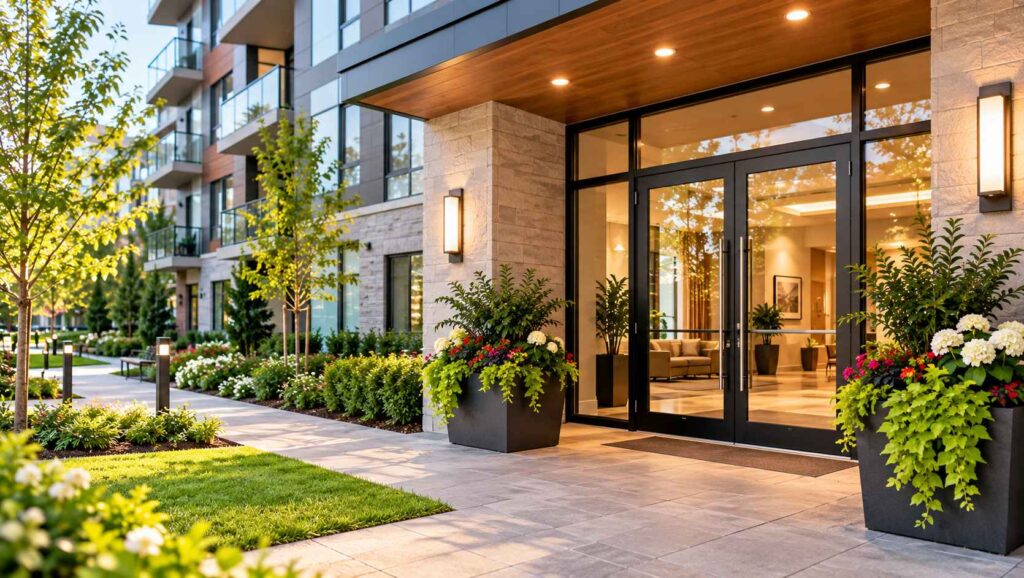
Look at the entrance, lobby, corridors, stairwells and other shared spaces. Are they reasonably clean and orderly? Do doors, handles and fixtures appear to be in usable condition? Is the lighting working where you would expect it to?
Small observations can help you form a broader picture of the property.
You should also notice whether common areas appear to receive regular attention. One scuffed wall or worn floor does not necessarily indicate poor management. Buildings experience everyday wear, especially in high-traffic areas.
What matters more is the overall pattern. Is the property generally cared for, or are there numerous signs that routine issues have been left unattended?
Distinguish Wear From Neglect
It is easy to confuse an older building with a poorly maintained building.
Paint may not be perfect. Flooring may show signs of use. Fixtures may have cosmetic imperfections. None of these automatically means a rental is a poor choice.
Instead, consider whether the things that affect everyday use appear to be functioning properly.
Check doors and windows where practical. Notice whether taps and fixtures operate normally. Look at shared lighting. If there is an elevator, pay attention to its general condition and whether information about service or maintenance is clearly communicated when applicable.
The distinction is important because responsible rental decisions should be based on usability and ongoing care rather than appearance alone.
A property can have some cosmetic wear while still being well maintained. At the same time, a beautifully presented suite does not tell you everything about the building’s day-to-day upkeep.
Pay Attention to Maintenance Communication
Maintenance is one of the most important parts of renting because issues can arise even in a property that is otherwise in good condition.
Before committing to a rental, find out how residents are expected to report routine maintenance concerns and how urgent situations are communicated. The exact process will vary between properties, so ask for clear information rather than making assumptions.
Good communication is useful because renters should know where to direct a concern when something needs attention.
It is also worth asking what information is provided at move-in. Basic instructions, contact information and building procedures can make it easier for a new resident to understand how the property operates.
Once you move in, keep records of maintenance requests and relevant communication. This does not need to become complicated. A simple email trail, note or digital folder can help you remember when an issue was reported and what information was provided.
Where tenant or landlord responsibilities are governed by provincial rules, those requirements can differ depending on where you live. Renters should review their lease and consult applicable provincial resources when they need specific information.
Seasonal Upkeep Tells Part of the Story
Canadian properties have to deal with changing seasons, and seasonal maintenance can affect the practical experience of living in a building.
During warmer months, exterior areas and landscaping may receive more attention. In autumn, entrances and shared areas may need to be kept clear as weather changes. Winter brings considerations such as snow and ice management, heating, entrances and other cold-weather concerns.
Renters do not need to inspect a property like building professionals. The point is simply to observe whether the property appears prepared for the season and whether common areas are reasonably usable.
If you are viewing an apartment during winter, for example, notice the condition of entrances and walkways as you arrive. During warmer weather, look at outdoor areas and the general condition of the property’s exterior.
These observations are not proof of how a property will operate throughout the year, but they can help you ask better questions.
Consider the Building as Part of Your Daily Routine
A rental property becomes more than a private apartment once you live there.
You may use the entrance every morning, walk through shared corridors several times a day, collect deliveries, take out recycling or waste, use laundry facilities, access parking or storage, and interact with property staff when necessary.
That means small building details can have a greater effect on your experience than they initially seem to.
Think about the route you will take regularly. Is the entrance convenient? Are shared areas easy to navigate? Does the property seem reasonably organized? If you have a vehicle, consider how parking arrangements fit your routine. If you use public transportation, consider how easily you can get from the building to your usual route.
The apartment may be your primary focus, but the building is the environment surrounding it.
Ask About How Issues Are Handled
During a viewing, renters sometimes hesitate to ask questions about maintenance because they do not want to appear overly demanding. In reality, straightforward questions can help you understand what to expect.
You might ask how residents normally submit a maintenance request, who should be contacted for an urgent issue, or where building notices are posted.
You can also ask whether there are regular inspections or routine maintenance procedures, without expecting the person showing the property to provide technical details they may not have.
The objective is not to judge a property based on a single answer. It is to understand whether there is a clear process for dealing with the ordinary issues that come with operating a residential building.
Renters comparing professionally managed options, including Osgoode Properties rentals, can look at the apartment while also considering how building upkeep, communication and ongoing management fit into the overall living experience.
Report Small Problems Before They Become Bigger Ones
Once you become a tenant, it is tempting to ignore a minor problem if it does not seem urgent.
A dripping tap, damaged fixture, unusual noise, faulty light or other small issue may seem like something you can simply live with. However, reporting concerns through the appropriate property-management process can help ensure that the issue is documented and assessed.
This does not mean every minor imperfection requires immediate attention. Use common sense and follow the property’s established procedures.
Urgent problems should be handled according to the emergency instructions provided by the property or applicable rules. Routine issues can generally be reported through the normal maintenance channel.
Keeping communication clear is helpful for both renters and property managers because it creates a record of what was noticed and when it was reported.
Check the Details During an In-Person Viewing
Listing photos are useful for narrowing down rental options, but they cannot show everything.
If possible, use an in-person viewing to look at details that are difficult to evaluate online. Listen to the general sound level. Check natural light at the time of day you are viewing. Look at shared spaces. Notice the condition of entrances and hallways.
You can also pay attention to practical details such as outlet locations, storage, laundry arrangements, parking, access points and the placement of furniture in the actual space.
None of these observations needs to produce a perfect score. Instead, they help you compare properties using the same criteria.
A simple checklist can make this process easier. Record notes about the unit, the building, location, management questions and anything that needs clarification. Taking permitted photographs can also help you remember details after viewing several properties.
Look for Consistency Rather Than Perfection
One of the most useful principles for evaluating rental housing is consistency.
A building with a few visible signs of ordinary wear may still be a comfortable place to live if essential areas are maintained and concerns are handled through a clear process.
Likewise, a freshly presented apartment should not be the only reason to choose a property if other parts of the rental experience raise questions.
Try to combine what you see with what you are told.
If the property appears organized, questions are answered clearly, common areas are reasonably maintained and you understand how to report concerns, you have more information to work with than you would from a suite viewing alone.
No single observation can predict your entire rental experience, but several observations together can help you make a more informed decision.
Building Condition Is Part of Rental Value
Rent is obviously an important factor when comparing housing, but the lowest advertised monthly cost is not necessarily the only consideration.
A rental is where you will spend time, establish routines and manage everyday responsibilities. Building condition, maintenance processes, communication and convenience all form part of that experience.
This does not mean renters should automatically pay more for a newer-looking property. It means they should compare the complete housing arrangement rather than judging it from one number or one photograph.
A useful evaluation might include the apartment, the building, the neighbourhood, transportation, practical costs, management process and expected day-to-day routine.
The right balance will be different for every renter.
Make the Whole Property Part of Your Decision
Before choosing a rental, take a few minutes to step back from the apartment itself.
Ask whether the building appears cared for. Consider how maintenance concerns are communicated. Look at common areas and practical access points. Think about whether the property fits your everyday routine, not just whether the suite looks good during a short viewing.
Most importantly, separate normal wear from signs of ongoing neglect. No lived-in building will remain flawless, and cosmetic imperfections are not necessarily a problem.
What matters is whether the property seems functional, reasonably maintained and supported by a management process that renters can understand.
A good rental decision is rarely based on one impressive feature. It comes from looking at the entire living environment and deciding whether it makes sense for your needs, budget and expectations.
The apartment is where you live, but the building is part of that home too.